


Hi there,
After a four-week break — courtesy of a sciatic nerve with strong opinions — I’m happy to be back in by office chair and in your inbox. There is plenty to catch up on.
Beyond the updates on the new WordPress and Gutenberg versions, you’ll find stories below from WordPress veterans on migrating to and working with block themes on client sites and dive into more complex theme solutions or
Don’t let me keep you from your light summer reading.
Have a splendid weekend ahead!
Yours, 
Birgit

Developing Gutenberg and WordPress
The team around release lead Aaron Jorbin pushed WordPress 7.0.1 Maintenance release out the door to update millions of WordPress sites. The update covers 17 Trac tickets and 14 Gutenberg PRs. The full list is available in the RC 1 announcement post from last week.
In WordPress 7.0.1 Fixes Registration Spam, wp_kses() CSS Corruption, and 7.0 Admin Design Glitches, I cover the most important fixes for end users and developers of this release. You’ll learn how the registration-spam loophole got closed, which admin design glitches were sanded off, and why developers can finally remove their wp_kses() CSS workarounds. Update your sites soon if auto-updates aren’t enabled.
Ryan Welcher compiled What’s new for developers (July 2026), and it’s all about the 7.1 cycle getting real: Beta 1 lands July 15, final release August 19 at WordCamp US. You’ll want to test responsive styling, the React 19 runtime flag, and Unicode email addresses now. Also on your radar: merge proposals for Core Abilities and Guidelines, the 40px component default, icons inheriting color, and Playground’s MCP support.


Berislav “Bero” Grgičak announced what’s new in Gutenberg 23.5, released July 1. The headliner: you can now drag the editor canvas to any width, with the device preview dropdown and resize handles working together for responsive editing. The experimental Media editor gains a magnified crop canvas, pixel-snapping handles, and Cover block support. Also notable: text shadows in Global Styles, flip and rotate controls for the Icon block, and a minimum WordPress version bump to 6.9.
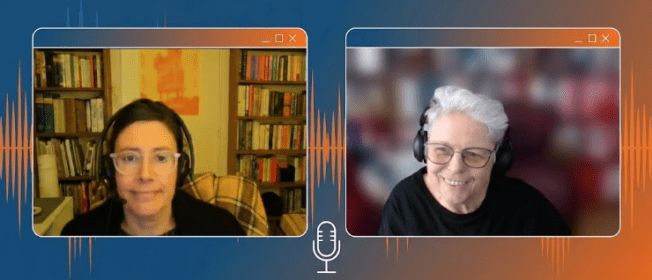
For the next episode of the Gutenberg Changelog, I sat down with Ellen Bauer to chat about what’s coming next for WordPress. We dug into the latest Gutenberg plugin releases (23.4 and 23.5) and the recent WordPress 7.1 update. Plus, we walked through some big merge proposal, like the Design System Theming. our excitement around responsive styling coming to WordPress. It’s a packed episode full of news you won’t want to miss! The episode will land in your favorite podcast app over the weekend.


WordPress 7.1 roadmap and more calls for testing
Anne McCarthy published Roadmap to WordPress 7.1., scheduled for August 19, 2026. Longstanding styling gaps are being tackled: responsive styling and interactive-state styling let you adjust blocks per viewport or on hover — no custom CSS required. You’ll also find new Playlist, Table of Contents, and Tabs blocks, a smarter command palette, a Design → Identity screen, the admin bar inside the editors, a media editor modal, and expanded Unicode support for email addresses.
Also mentioned Real-time collaboration, Knowledge Guidelines, React 19 upgrade, Classic block deprecation have been punted since the posts came out. Beta 1 arrives July 15 and will settle which of the other Roadmap features are in and which will be punted to a future release.
The latest Weekend Edition listed three calls for testing. Meanwhile, two more came online:
Nikunj Hatkar, this year’s team rep of the Core Test team, posted a call for testing responsive styling. You’ll be able to style blocks differently for tablet and mobile right in the editor — no custom CSS or media queries needed. The underlying PR unifies the resizable canvas with the device-preview switcher. Fire up the linked WordPress Playground instance, walk through the four test scenarios, and share what feels intuitive or broken. Plugin and theme developers should test their canvas integrations, too.
Dennis Snell published a call for testing Unicode email addresses. With initial support merged, is_email() and sanitize_email() now accepting non-ASCII addresses like grå@grå.org, and validation aligns with the Web Hypertext Application Technology Working Group (WHATWG) spec. You’ll want to check your plugins and themes: the new WP_Email_Address class gives you structured access to local and domain parts, and a snippet lets you disable Unicode support until third-party integrations catch up.
Three Merge Proposals
Core contributors put together three merge proposal for new features to be added to Core for public comment.
Jorge Costa published a merge proposal to expand WordPress Core Abilities in WordPress, adding three read-only abilities covering settings, content, and users. Building on the Abilities API from 6.9, they give the AI Client real tools to call, so agents can understand your site’s configuration, posts, and people. Settings and post types opt in through a dedicated flag, and management abilities are planned for a later WordPress version.
Greg Ziółkowski published a merge proposal for Guidelines built on Knowledge, a new custom post type headed for WordPress 7.1. Knowledge gives your site one shared home for standards, memories, and notes — with revisions, capabilities, and REST access built in. Guidelines is the first feature on top, letting you capture voice, tone, and per-block rules right where writing happens. Although, originally aimed at WordPress 7.1, in their latest comment, Anne McCarthy indicated that it needs to simmer some more before it’s considered for inclusion in WordPress Core.
Andrew Duthie published a merge proposal for Design System Theming, bringing design tokens and a new theme component to WordPress. Built by the Gutenberg Components Team, it turns hard-coded admin styles into CSS custom properties, so your plugins and screens stay consistent and accessible. A color ramp tool generates harmonious, accessible scales from just two seed colors, and the user color scheme reaches the Site Editor — with dark mode on the horizon.
Plugins, Themes, and Tools for #nocode site builders and owners
Anne Katzeff published a tutorial exploring the WordPress Cover Block for parallax scrolls. You’ll learn how the Fixed Background setting turns a Cover block into a layered parallax effect — background, middle ground, and foreground text moving at different speeds. The post steps through nesting a second Cover block, switching which layer scrolls, and improving text readability with grouped backgrounds. A video tutorial rounds it out. She also demos her process in this YouTube video.
Carrie Dils shared a case study, One Header, Two Themes, on phasing a legacy Elementor site toward Full Site Editing without a rebuild or content freeze. Using ThemeSwitcher Pro to run two themes side-by-side, she built one shared header in a plugin that both themes render. You’ll learn from five real-world snags — WooCommerce’s hooked blocks, cascade conflicts, routing gaps, query-string bypasses — and why shipping the shared layer first de-risks everything after.
Gina Lucia compared WordPress block themes vs page builders on the Ollie blog. You’ll get a clear-eyed walkthrough of what classic themes, page builders, and block themes each handle — scope, design control, performance, lock-in, and maintenance — with side-by-side tables. Her conclusion: block themes combine sitewide design control with visual editing natively, so you rarely need a page builder anymore, though migration costs and team habits can justify keeping one.
Elliott Richmond explained why he spent 16 months turning 400+ holiday cottages into WordPress blocks. The kate & tom’s site moved from ACF flexible content to a native block theme, freeing the marketing team from waiting on custom widgets. You’ll appreciate his candor: 10,590 widgets migrated via a purpose-built plugin, re-run against fresh production snapshots, with flaky conversions fixed by hand. Even untuned, PageSpeed jumped from 22 to 67.
Wes Theron published a video tutorial, How to Create and Edit Navigation Menus in WordPress, for anyone getting comfortable with block themes. In under ten minutes, you’ll learn how to edit your menu with the Navigation block, add pages, posts, categories, and custom links, and build dropdown menus. Timestamps let you jump straight to the part you need — handy if dropdowns are the only thing standing between you and a finished header.
Theme Development for Full Site Editing and Blocks
Henrique Iamarino shared how the Automattic Design team built a WordPress theme without ever opening Figma. You’ll follow the making of Crafted, a production-ready theme created almost entirely in the WordPress Editor: Global Styles for typography and spacing, Create Block Theme to save edits to theme files, WordPress Studio for local review, and an AI assistant for finishing-touch hover CSS. His takeaway: the Editor is now a professional design surface.
Justin Tadlock explained how to dynamically load template parts in block themes on the Developer Blog. Instead of maintaining a pile of near-identical templates, you can hook into the render_block_data filter and swap a template part’s slug on the fly — say, a different sidebar per post category. His walkthrough covers early returns, fallback behavior, and file setup, and the technique works for headers, footers, and banners, too.
AI and WordPress
Jeff Paul announced what’s new in AI 1.1.0, the latest release of the canonical AI plugin. Two experiments headline, type-ahead text suggests inline ghost text as you write in the block editor, and key encryption secures your AI Connector API keys in the database. You’ll also find smarter content readiness checks with locale-aware counting, more control over guest comment moderation, a new core/read-settings Ability, and a peek at 1.2.0 plans.


Questions? Suggestions? Ideas?
Don’t hesitate to send them via email or
send me a message on WordPress Slack or Twitter @bph.
For questions to be answered on the Gutenberg Changelog,
send them to changelog@gutenbergtimes.com


